

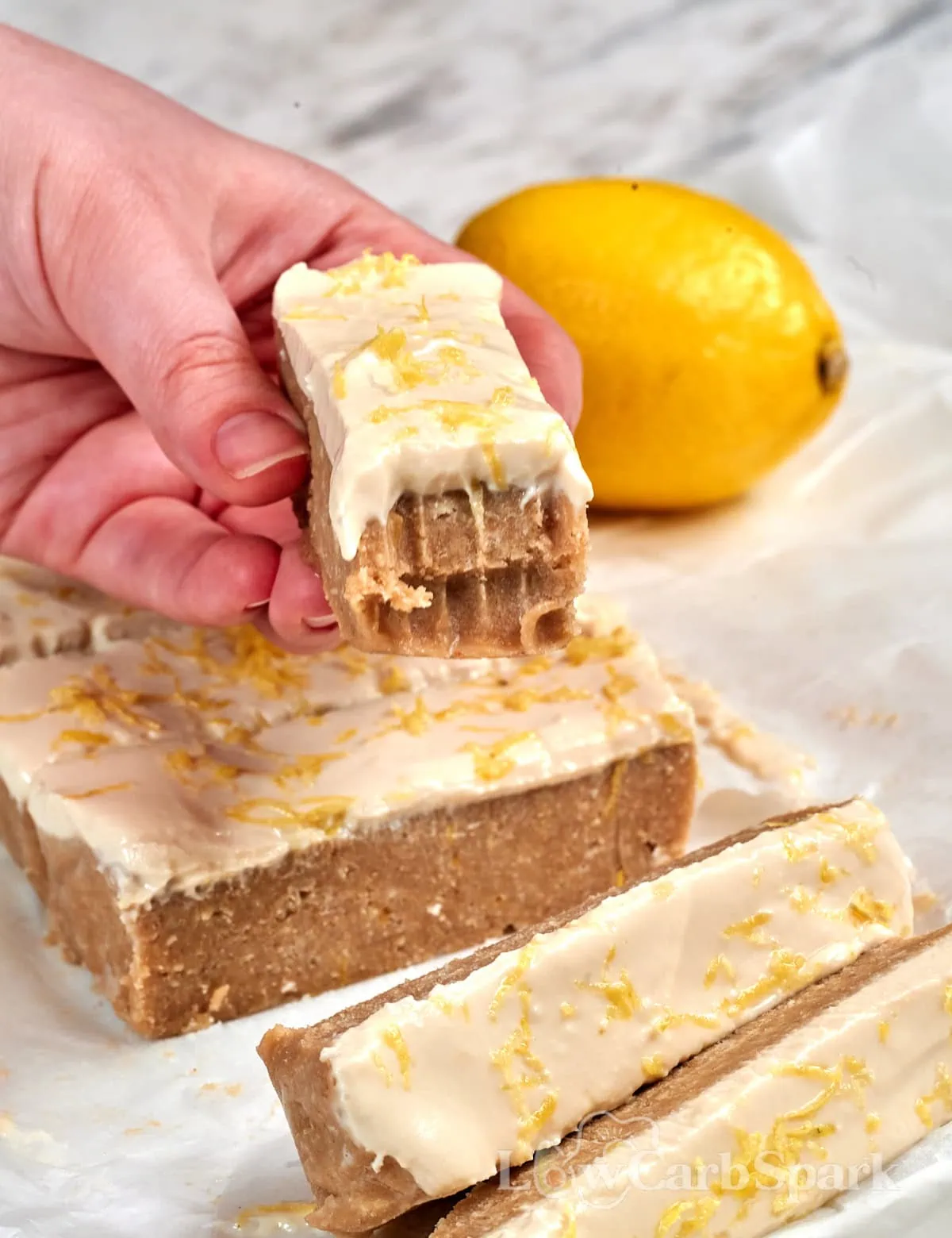
These Lemon Cottage Cheese Protein Bars are exactly what I want when the weather is warm and I’m craving something cold, creamy, and fresh from the fridge. They have a bright lemon flavor, a soft cheesecake-like texture, and enough protein to make them feel more satisfying than a regular sweet snack.
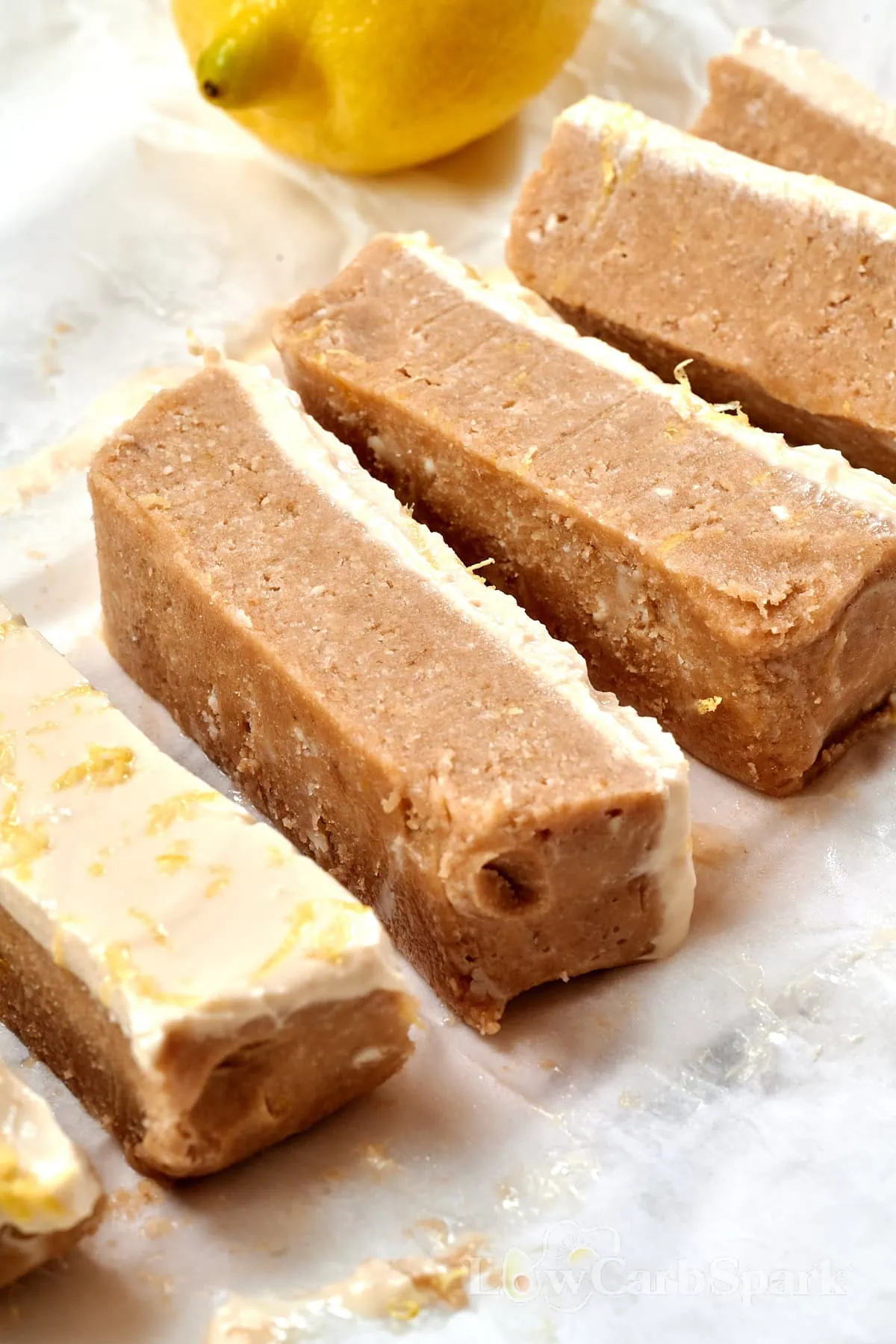
I’ve been focusing a lot more on protein lately, especially in snacks and desserts, because those are the moments when I usually want something quick but still filling. I already love making my High-Protein Cottage Cheese Lemon Mousse when I want something creamy and light, but sometimes I crave something a little more consistent, something I can actually pick up, slice, and enjoy like a real dessert bar.
That’s how these lemon protein bars came to life. I wanted that bright lemon flavor I love so much, but in a bar that feels more like dessert than a protein snack. The base is soft and cookie-like, and the top layer is creamy, lemony, and just sweet enough, with a little white chocolate to make it taste extra special.
I also wanted to make these without oat flour because I know many of you are looking for lower-carb, higher-protein treats that still taste good. These bars are best served chilled, and I love them straight from the fridge when I need something sweet with my coffee or a quick snack between meals.
Why You’ll Love These Lemon Cottage Cheese Protein Bars
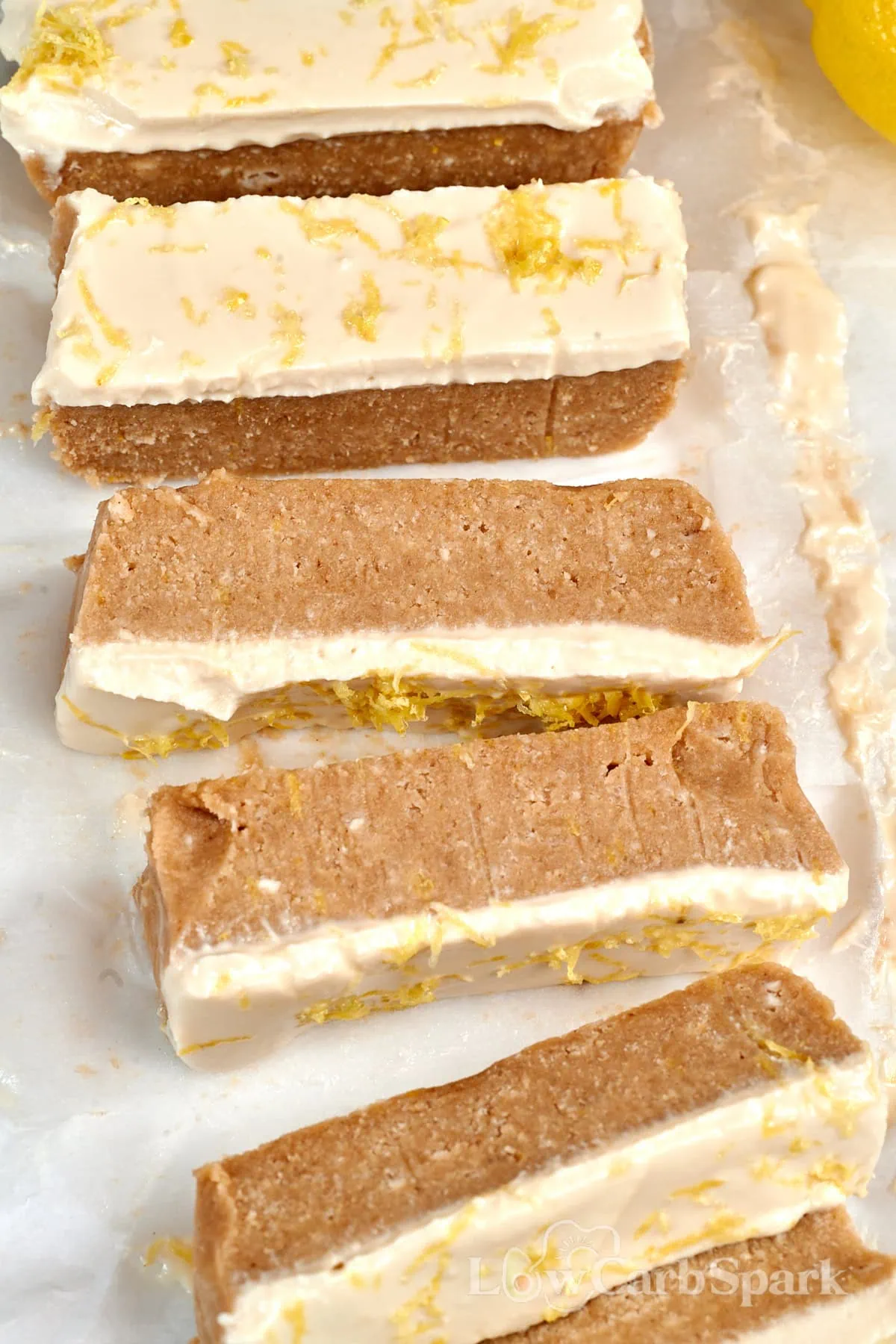
High in protein – Each bar has about 23g of protein, depending on the protein powder and cottage cheese you use.
Fresh lemon flavor – Lemon juice and zest make these bars bright, slightly tangy, and so refreshing.
Tastes like dessert – The creamy lemon frosting and a little melted white chocolate make these feel like a real sweet treat, not a boring protein snack.
Made with cottage cheese – It blends right into both layers, adding protein and creaminess without making the bars taste like cottage cheese.
Ingredients You’ll Need
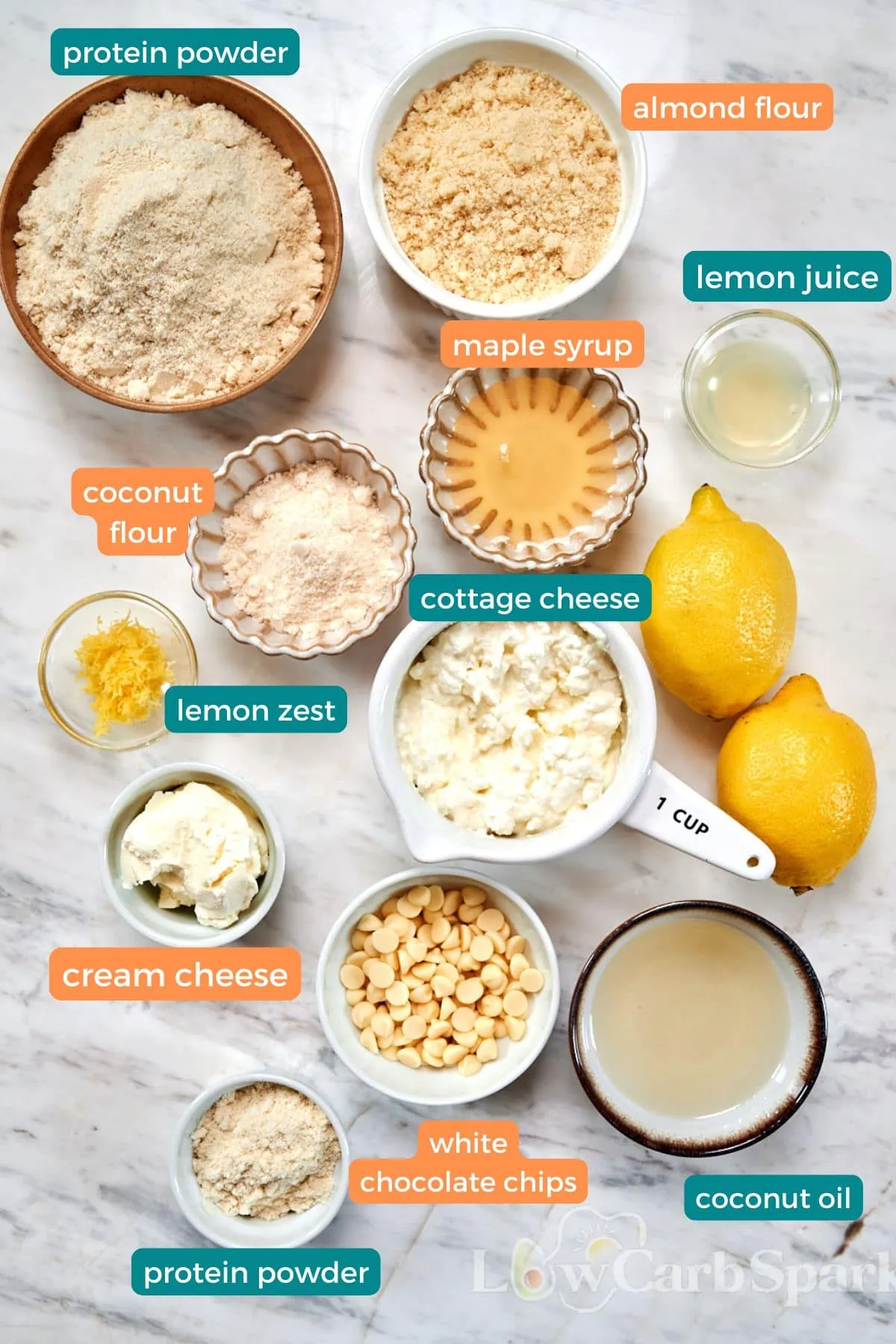
For the Cookie Layer
Vanilla Protein Powder – This helps give the bars structure and adds most of the protein. Keep in mind that protein powder is usually already sweetened, so you don’t need a lot of extra sweetener in this recipe. I used a salted caramel protein powder, and it worked so well with the lemon flavor, but vanilla is the easiest option. If using unflavored protein powder, you may need to add a little more sweetener and vanilla. I recommend whey protein for the softest texture. Plant-based protein powder may make the crust drier or thicker because it absorbs more liquid.
Cottage Cheese – Cottage cheese adds protein and keeps the cookie layer soft instead of dry. Blend it until completely smooth before adding it to the dough so you don’t get any curds. Full-fat cottage cheese gives the best texture, but low-fat cottage cheese also works. The bars may be slightly less rich.
Almond Flour – Almond flour keeps the crust soft and slightly chewy while making the bars lower in carbs than using oat flour. Use fine blanched almond flour for the best texture. Almond meal is coarser and may make the crust more crumbly.
Coconut Flour – You only need a small amount because coconut flour absorbs a lot of moisture. It helps the crust hold together without needing oat flour. I don’t recommend replacing coconut flour 1:1 with almond flour because they work very differently. If you skip it, the crust may be too soft.
Melted Coconut Oil or Butter – This adds moisture and helps the crust firm up once chilled. Coconut oil gives a slightly firmer texture from the fridge, while butter gives a richer flavor.
Both work, so use what you prefer.
Sugar-Free Maple Syrup– This adds a little sweetness and helps bring the dough together. Since the protein powder is already sweetened, you don’t need much. You can use regular maple syrup if you’re not strict low-carb.
Lemon Juice – Fresh lemon juice gives the bars that bright, tangy lemon flavor. Bottled lemon juice works in a pinch, but fresh tastes better here.
Lemon Zest – This gives the bars the best fresh lemon flavor without adding extra liquid. I wouldn’t skip it if you love lemon desserts like I do. For an even stronger lemon flavor, you can also add a few drops of lemon extract to the frosting or the cookie layer.
Salt – Just a pinch balances the sweetness and makes the lemon flavor pop. If your protein powder is very sweet, salt helps keep the bars from tasting flat.
For the Lemon Frosting Layer
Cottage Cheese – This makes the frosting creamy and adds extra protein. Blend it really well with the cream cheese and protein powder until silky smooth.
Again, full-fat cottage cheese gives the creamiest result, but low-fat works too.
Cream Cheese – Cream cheese makes the frosting thicker, creamier, and more dessert-like. I prefer full-fat cream cheese because it sets better, but low-fat cream cheese can work if that’s what you have.
If the frosting feels too thin, add a little more cream cheese or protein powder.
Vanilla Protein Powder – This thickens the frosting and adds protein. Since it’s already sweetened, taste the frosting before adding any extra sweetener.
Vanilla works beautifully, but salted caramel protein powder also tastes amazing with lemon and white chocolate.
Lemon Juice – Adds freshness and a little tang to the frosting. Don’t add too much, or the frosting can become too thin.
Lemon Zest – Gives the frosting a stronger lemon flavor without making it watery. This is the best way to make the bars taste fresh and lemony.
Sugar-Free White Chocolate Chips – The melted white chocolate makes the frosting taste more like a real dessert and helps it set once chilled.
You can use regular white chocolate if you’re not strict low-carb. If you skip it, the frosting will be softer and less rich.
Coconut Oil – This helps melt the white chocolate smoothly and gives the frosting a better texture once chilled.
You can use butter instead, but coconut oil usually sets a little firmer in the fridge.
How To Make Lemon Cottage Cheese Protein Bars
These bars are easy to make, but the texture depends on two things: blending the cottage cheese until smooth and chilling the bars long enough before slicing.
Make the Cookie Layer
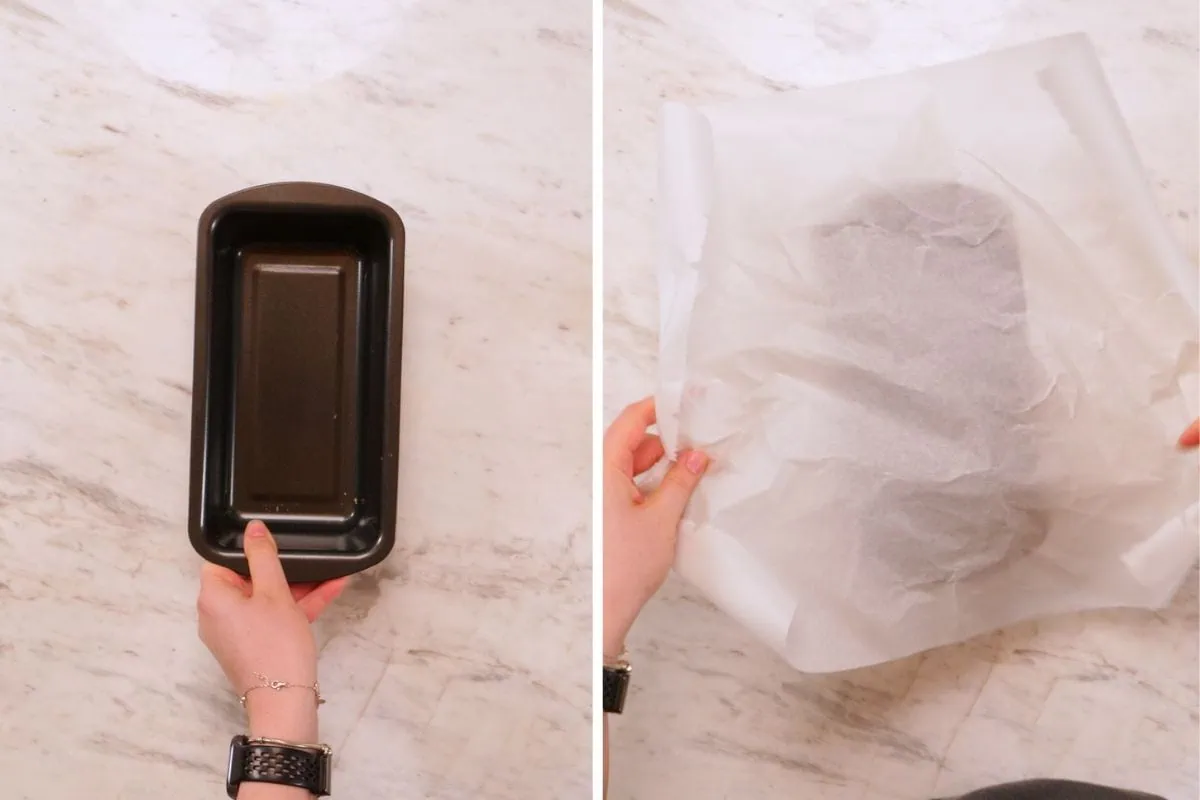
Start by lining an 8×4-inch loaf pan with parchment paper. Leave a little parchment over the sides so you can lift the bars out easily later.
Blend the cottage cheese until completely smooth. This is the step that makes the bars taste creamy and soft instead of grainy.
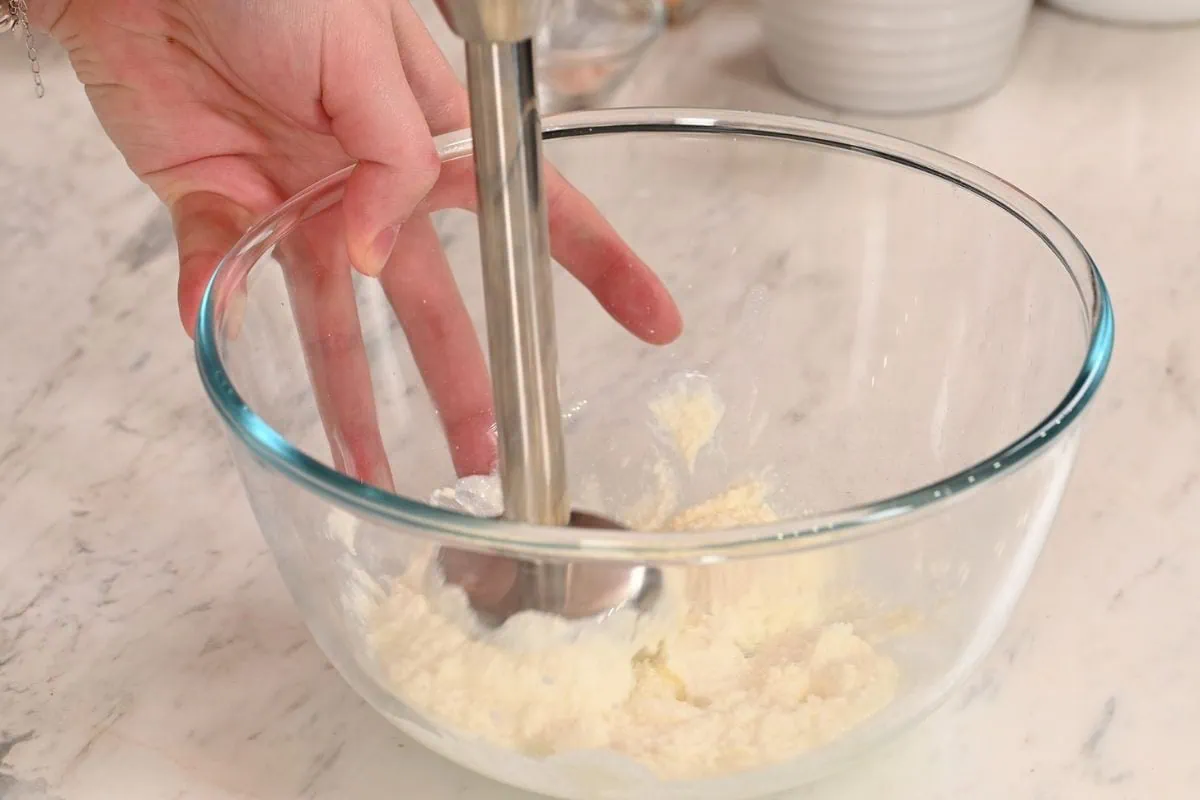
Add the cookie layer ingredients to a bowl and mix until a soft, thick dough forms. It should feel like a soft cookie dough, not a runny batter. If it feels too dry, add 1 tablespoon of sugar-free maple syrup, melted butter, or almond milk. If it feels too soft, let it sit for a few minutes so the coconut flour can absorb more moisture.
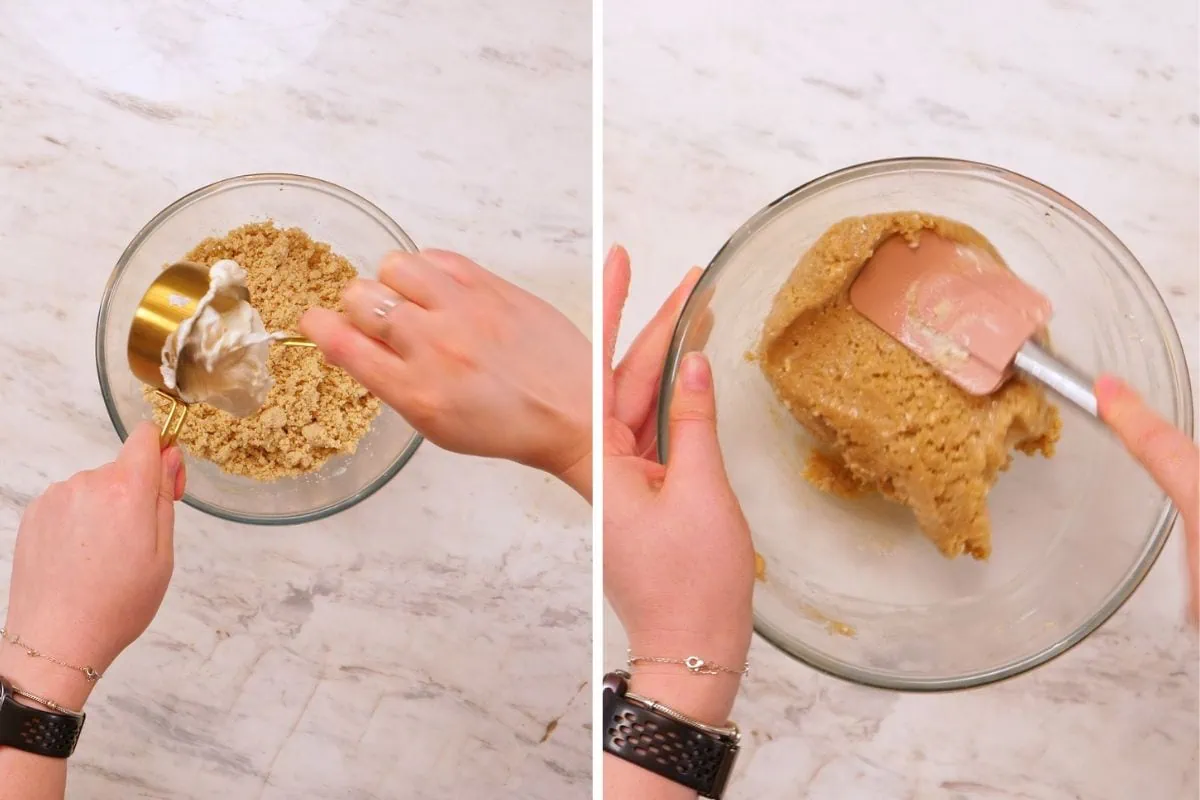
Press the dough firmly into the prepared pan and smooth the top with a spoon or spatula. Place it in the fridge while you make the frosting.
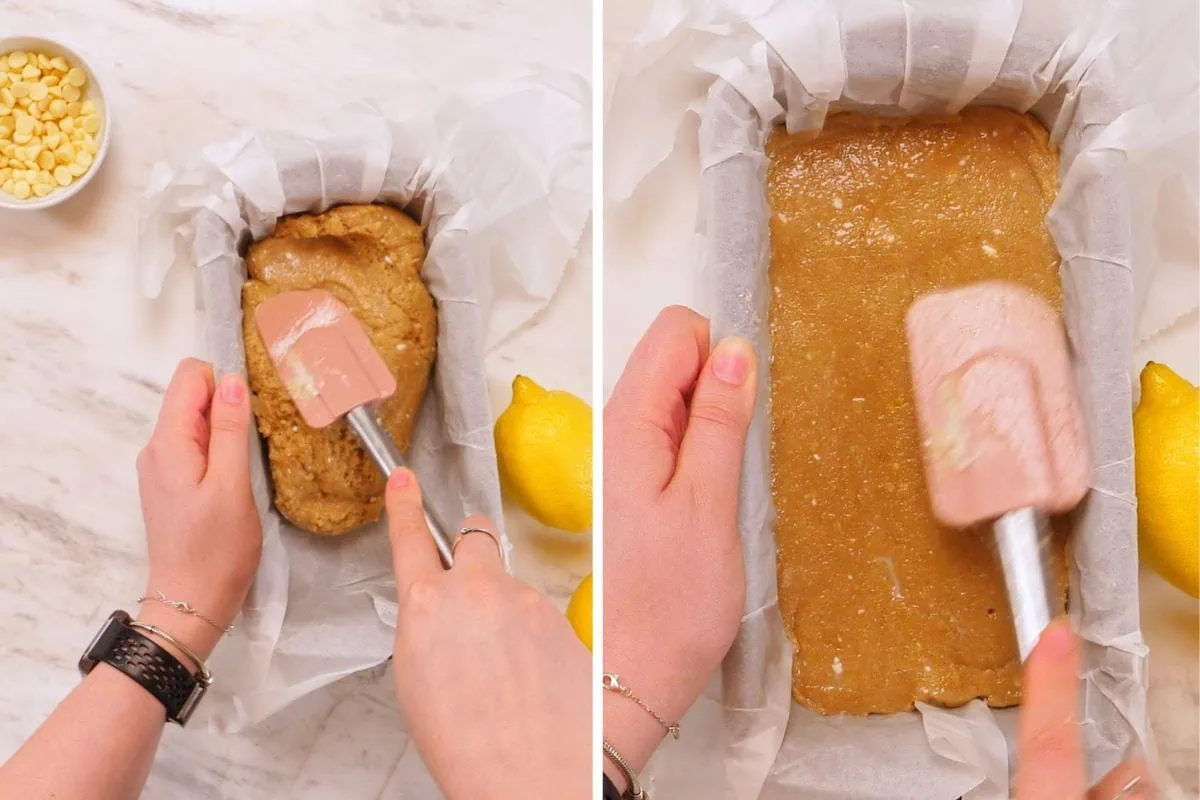
Make the Lemon Frosting
Add the frosting ingredients to a blender or food processor and blend until completely smooth and creamy. Take your time here because cottage cheese can take a little longer to blend than expected.
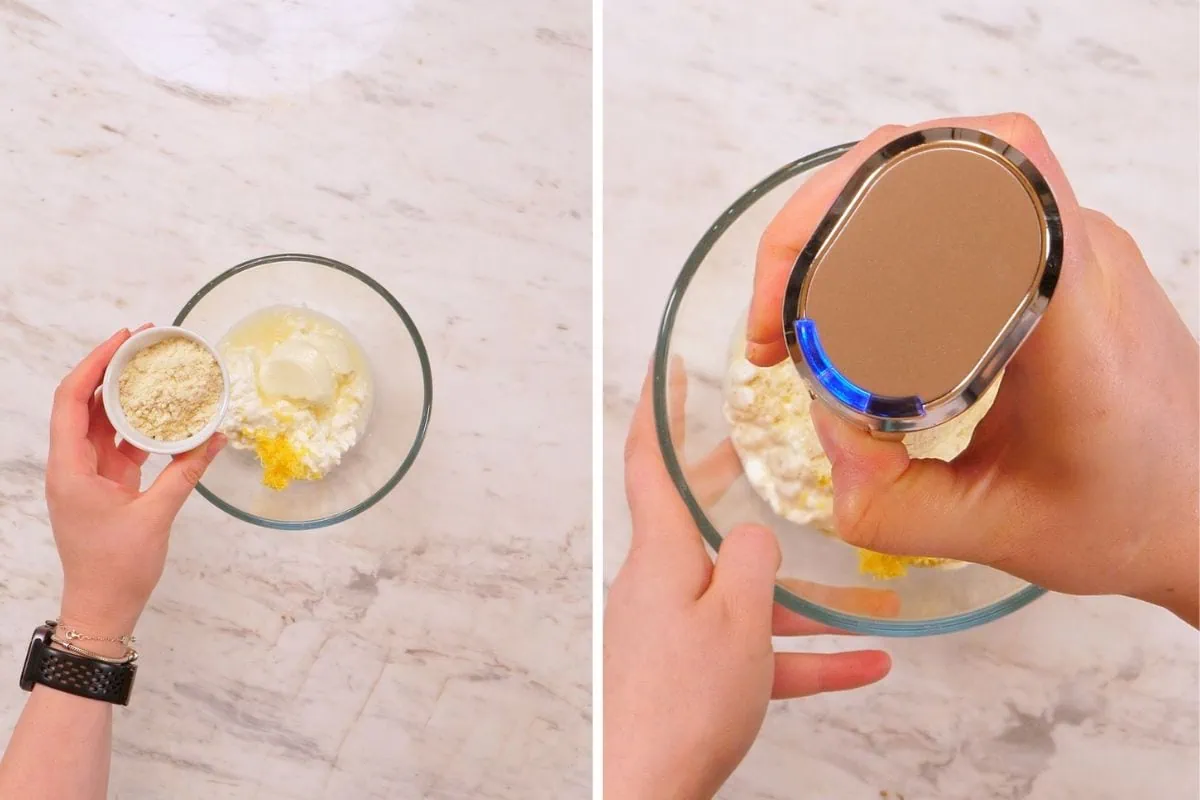
Melt the white chocolate with the coconut oil in short intervals, stirring often so it doesn’t burn. Add it to the frosting mixture and blend again until fully combined.
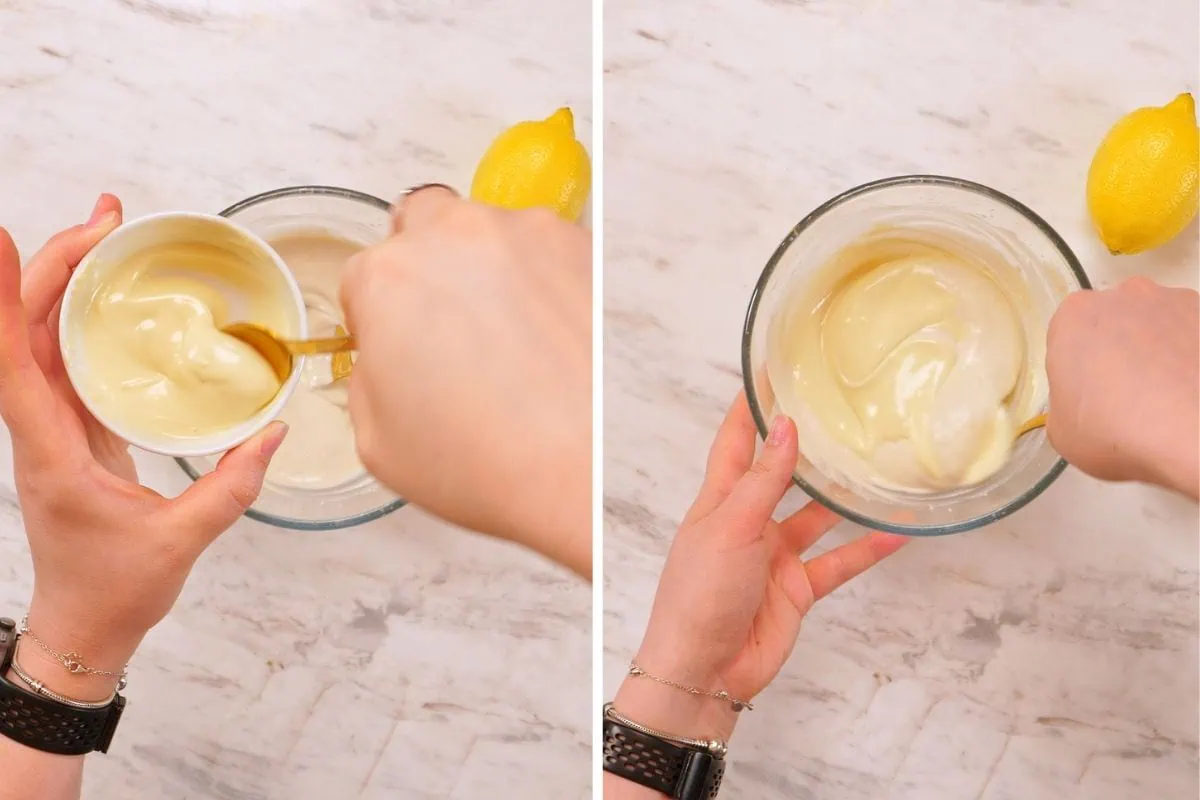
The frosting should be creamy, thick, and easy to spread. If it feels too thin, add a little more protein powder or cream cheese. If it feels too thick, add a tiny splash of almond milk or a few drops of lemon juice.
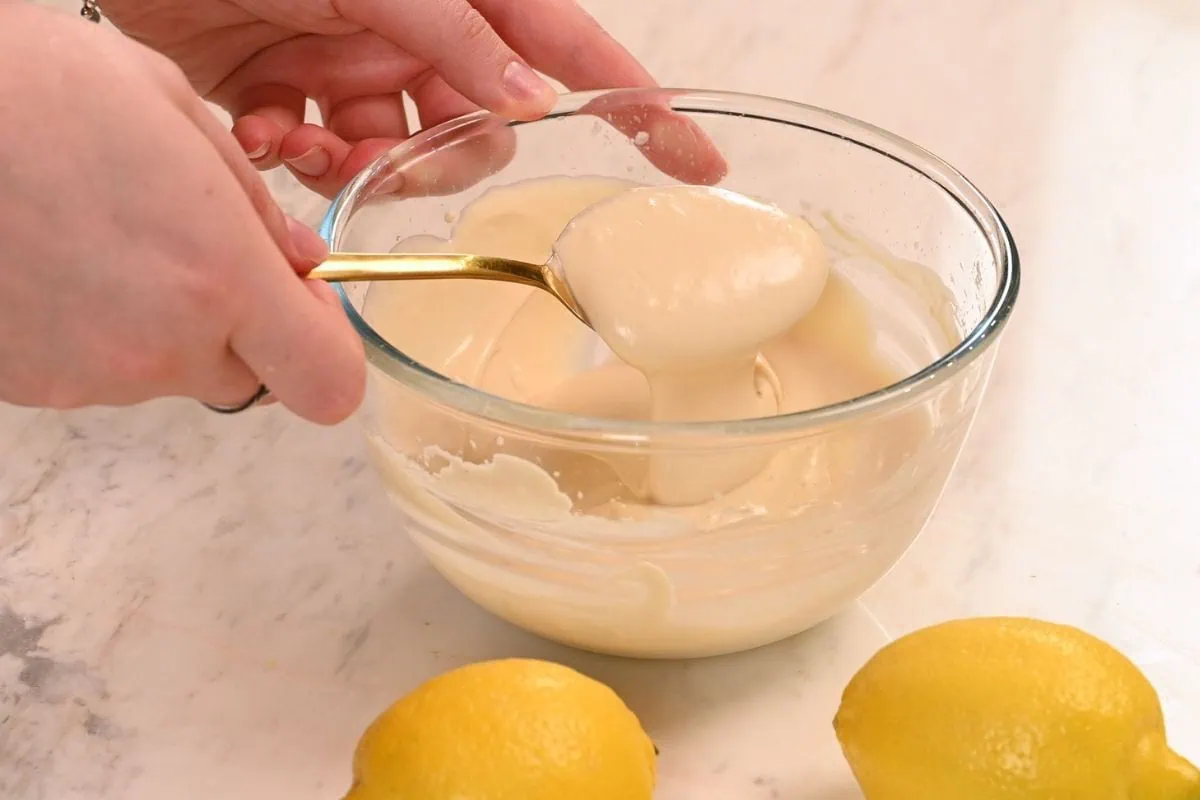
I also love adding a few drops of lemon extract to make the lemon flavor even brighter and more delicious. Start with just a little because lemon extract can be strong.
Assemble and Chill
Spread the lemon frosting evenly over the cookie layer, then smooth the top.
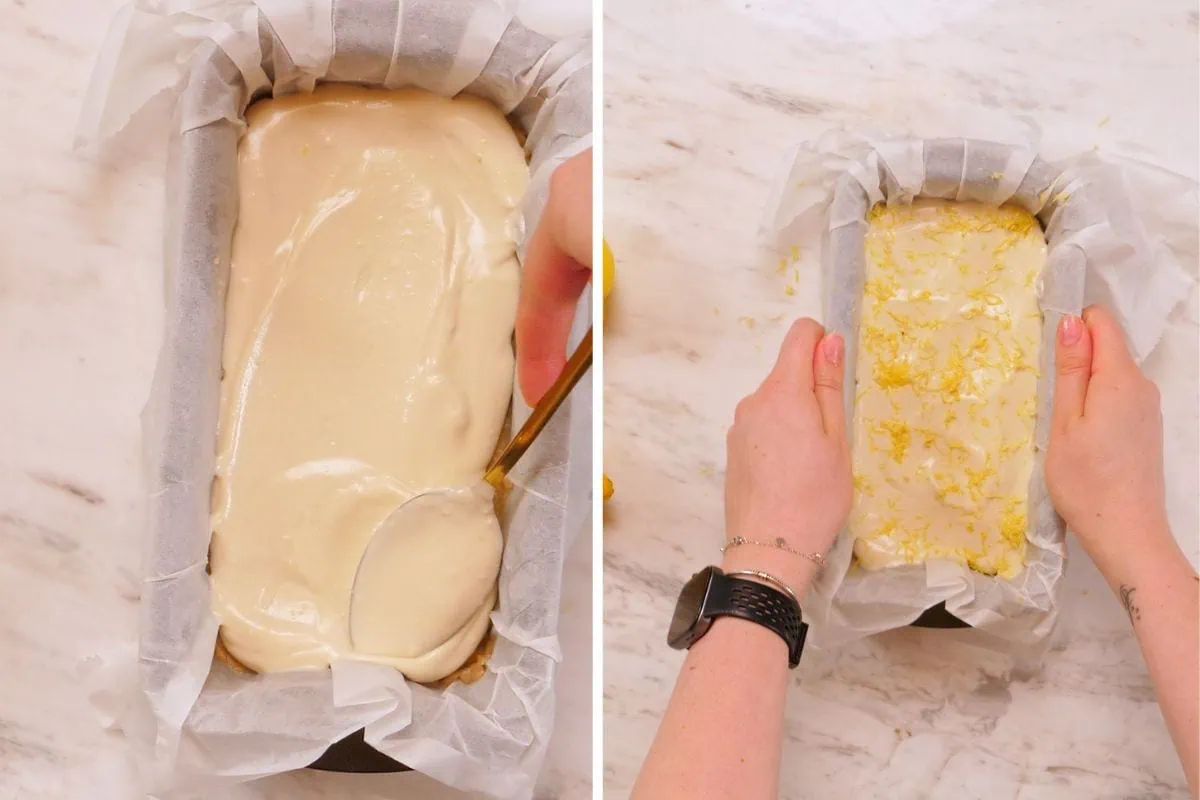
Freeze for 30 minutes or refrigerate for about 2 hours, until firm enough to slice.
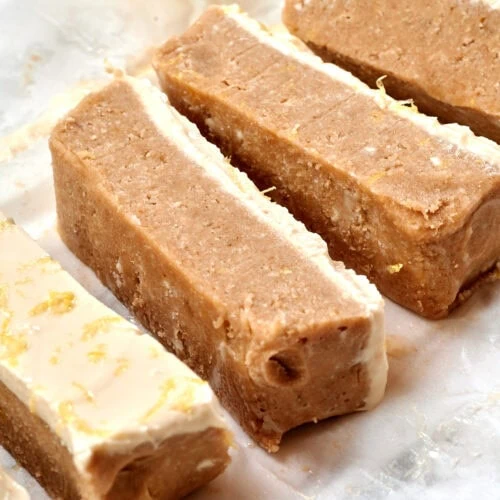
Lift the bars out using the parchment paper and cut them into 8 larger bars or 10 smaller pieces.
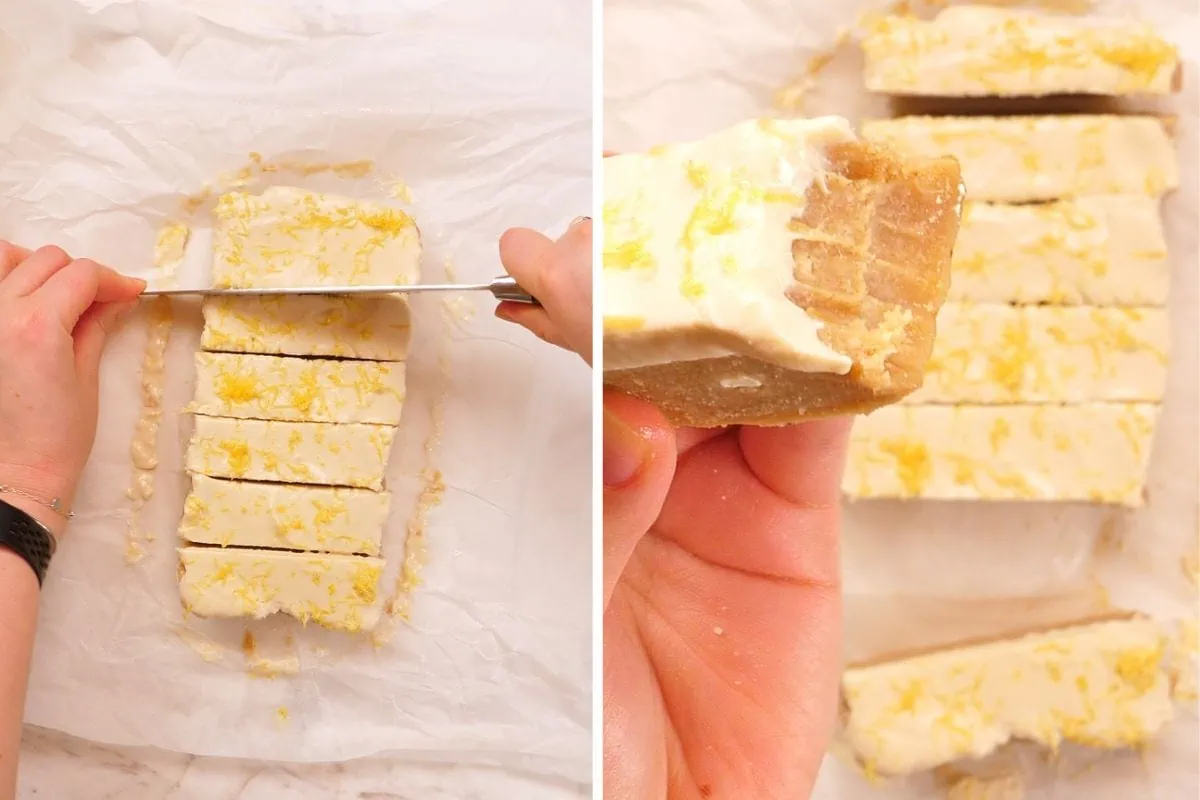
These are best served chilled. If you store them in the freezer, let them sit at room temperature for 5 to 10 minutes before eating so the crust softens slightly and the frosting gets creamy again.
Easy Variations
Add berries – I love adding a few fresh raspberries, blueberries, or chopped strawberries on top of the lemon frosting before chilling. Lemon and berries are always such a good combo.
Add crunch – Sprinkle chopped almonds, pistachios, pecans, or walnuts over the frosting before chilling. It adds a little crunch and makes the bars look prettier too.
Try a berry swirl – Swirl a spoonful of sugar-free raspberry or blueberry jam into the frosting before chilling for a lemon berry protein bar.
Use different chocolate – White chocolate works so well with lemon, but you can also use chopped dark chocolate or sugar-free chocolate chips if you prefer.
Make them sweeter – If your protein powder is not very sweet, add a little extra sugar-free maple syrup or powdered sweetener to taste.
Make mini bites – Instead of cutting them into bars, cut them into small squares and keep them in the freezer for quick little protein bites.
If you want the same peanut butter and cottage cheese combination in bar form, try my high-protein Cottage Cheese Snickers Bars.
Lemon Cottage Cheese Protein Bars FAQs
Do these bars taste like cottage cheese?
No. Once the cottage cheese is blended into the crust and frosting, you don’t really taste it. It just adds protein, moisture, and creaminess.
Do I have to blend the cottage cheese?
Yes, I really recommend it. Blending makes the texture smooth and creamy instead of grainy.
Can I use a different protein powder?
Yes, but the texture and sweetness may change. Whey protein usually gives the softest texture, while plant-based protein powder can make the bars thicker or drier.
Can I skip the protein powder?
I don’t recommend skipping it because it adds structure and most of the protein. Without it, the bars may be too soft.
Why is my crust too dry?
Protein powder and coconut flour can absorb a lot of moisture. Add 1 tablespoon of sugar-free maple syrup, melted butter, or almond milk until the dough holds together.
Why is my frosting too thin?
Add a little more protein powder or cream cheese and blend again until it thickens. The frosting should be creamy but spreadable.
More Protein Snacks
- High-Protein Cottage Cheese Lemon Chia Pudding
- No-Bake Protein Bars
- High-Protein Pecan Pie Balls
- No-Bake Peanut Butter Protein Balls
Lemon Cottage Cheese Protein Bars
Description
Ingredients
For the Cookie Layer
- 1 cup vanilla protein powder about 4 to 4.5 oz / 120g
- 1 cup cottage cheese full-fat, blended until smooth
- 3/4 cup almond flour about 75g
- 3 tbsp coconut flour about 14g
- 5 tbsp melted coconut oil or melted butter
- 3 tbsp sugar-free maple syrup
- 1 1/2 tbsp fresh lemon juice
- 1 tsp lemon zest optional but recommended
- Pinch of salt
For the Lemon Frosting Layer
- 1 cup cottage cheese full-fat
- 2 oz cream cheese softened
- 1/4 cup vanilla protein powder about 30g
- 1 tsp fresh lemon juice
- 2 tsp lemon zest optional but recommended
- 3 tbsp sugar-free white chocolate chips
- 2 tsp coconut oil
Instructions
- Line an 8×4-inch loaf pan with parchment paper, leaving a little overhang so you can lift the bars out easily.
- Add the cottage cheese for the cookie layer to a blender or food processor and blend until completely smooth.
- In a large bowl, mix the vanilla protein powder, almond flour, coconut flour, melted coconut oil or butter, sugar-free maple syrup, lemon juice, lemon zest, and salt.
- Add the blended cottage cheese and mix until a soft, thick dough forms. If the dough feels too dry, add 1 tablespoon of sugar-free maple syrup, melted butter, or almond milk.
- Press the dough firmly and evenly into the prepared pan. Smooth the top with the back of a spoon or a spatula. Refrigerate while you make the frosting.
- Add the cottage cheese, softened cream cheese, vanilla protein powder, lemon juice, and lemon zest to a blender or food processor. Blend until completely smooth and creamy.
- In a small microwave-safe bowl, melt the sugar-free white chocolate chips with the coconut oil in short intervals, stirring until smooth.
- Pour the melted white chocolate into the cottage cheese frosting mixture and blend again until fully combined.
- Spread the lemon frosting evenly over the chilled cookie layer.
- Freeze for 30 minutes, or refrigerate for 2 hours, until firm enough to slice.
- Lift the bars out of the pan, cut into 8 bars, and enjoy chilled.
- Store leftovers in the refrigerator or freezer. If frozen, let the bars sit at room temperature for a few minutes before serving for the best texture.
Nutrition information is shared to make meal planning easier. Values are estimates and can vary depending on the ingredients, brands, and serving sizes used. Learn more in my nutrition policy.
