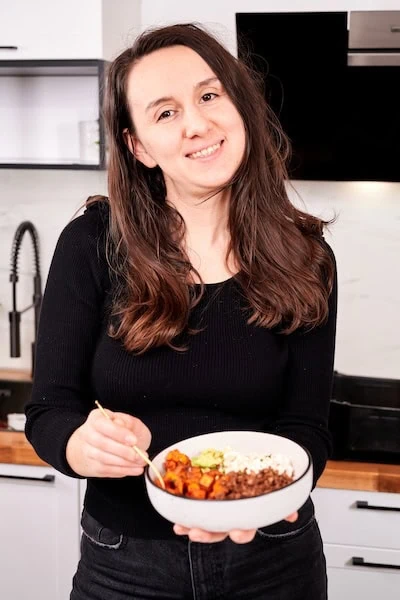
I’m Ioana Diaconu, recipe developer behind LowCarbSpark
I started LowCarbSpark in August 2015 from my own kitchen in Romania. Since then, I’ve cooked, tested, photographed, and written more than 800 recipes for readers who want low-carb, keto, high-protein, and family-friendly meals that actually work.
How every recipe gets tested
I don’t publish a recipe after one lucky test. I make it again, change what needs changing, and only share it when I’d be comfortable sending it to someone else’s kitchen. Most recipes take 8 to 12 hours of work, often spread across several days.
Develop the concept
An idea usually starts from a craving, a reader request, a family dinner problem, or a restaurant dish I want to recreate. I sketch rough ratios and ingredients in my notebook before I start cooking.
Test 3 to 7 times
Almost nothing works perfectly on the first attempt. Some recipes are ready by attempt three. Others take much longer. The keto caramel took ten. I document what worked, what failed, and what needs adjusting.
Taste-test with real people
Emilian, my husband, is the first brutally honest taste-tester for most recipes. Friends, neighbors, and family members test some recipes too. If something tastes dry, eggy, bland, too sweet, or too complicated, I want to know before you do.
Photograph and write
Once the recipe is final, I photograph the actual food I cooked, usually across multiple angles and steps. Then I write the post with substitutions, troubleshooting, storage notes, and the tips I learned during testing.
Publish only if it works
If a recipe still isn’t right after multiple tests, it doesn’t go live. I’d rather publish 10 recipes that work than 50 that waste your time and ingredients.
For baked recipes, I check texture after cooling, sweetness, pan size, timing, and whether common substitutions like almond flour, coconut flour, erythritol, or allulose change the result. For savory recipes, I retest with different protein sources, salt levels, cook times, and reheating methods.
I write everything by hand first, with physical notebooks and a real pen. After 10+ years of recipe development across 800+ published posts, those notebooks hold thousands of kitchen tests, including plenty of failures that never made it online.
How LowCarbSpark started
I came to recipe development through my own complicated relationship with food.
In my early twenties, I spent years moving between restrictive dieting, overeating, low-fat plans, strict low-carb rules, and calorie-counting apps that made food feel more stressful than helpful. The more I tried to follow a perfect plan, the less peaceful food felt.
What changed things for me wasn’t another extreme diet. It was learning to cook real food I genuinely enjoyed. When the meals on my plate felt satisfying, actually satisfying, not tiny diet portions, food slowly became something I made, not something I feared.
At that time, lower-carb meals gave me a simple structure for cooking. But the bigger shift was about cooking, not dieting. The kitchen became the place where I learned how to make meals that felt practical, satisfying, and realistic for everyday life.
I share this because many readers come to low-carb cooking from a similar place: wanting less stress, more confidence, and food that still tastes good. That experience still shapes every recipe I publish.
Launching the blog from college
I officially launched LowCarbSpark in August 2015, while I was still finishing college in Romania, where I grew up. I had been reading American cookbooks, food blogs, and watching YouTube cooking channels for years, and I wanted to write recipes for real American kitchens, the kind someone could actually cook on a Tuesday after work.
Emilian, my then-boyfriend and now my husband, is a programmer. He built the original site from scratch in 2015 and still maintains the technical infrastructure today. He’s also the first taste-tester for almost every recipe I develop. If brownies are dry or pancakes are eggy, he tells me.
I shot the first food photos outside in our backyard with my iPhone 6. My early recipes were simple: egg salad, skillet pizza, 90-second bread. Nothing fancy. Just food I was actually making and learning from.
Then came the keto brownies. That recipe reached more than 2 million lifetime views and became the post readers returned to again and again. It was the first time I saw how much one reliable recipe could help people.
Slowly, we saved for a real camera, then a video camera, then better lighting. I taught myself food photography through tutorials, practice, and a lot of bad photos. Ten years later, I’m still in the kitchen. Now I know what to do when bread fails the first time.
High-protein, low-carb, and family-real
LowCarbSpark started as a strict keto blog. It’s evolved.
After my son Victor was born in 2020, extremely low-carb eating stopped feeling right for my body. Pregnancy, breastfeeding, and family life changed what I needed from food. I started cooking with more protein, more vegetables, more whole foods, and less rigid macro counting.
Today, the blog covers three main areas:
High-protein recipes for families
Satisfying meals built around real protein sources, like cottage cheese recipes, protein bowls, and dinners with 30g+ protein per serving without feeling like diet food. These are the recipes I cook most often now, especially on weekdays when everyone is hungry and tired.
Low-carb and keto recipes that still work
Every low-carb and keto recipe I’ve developed since 2015 stays on the blog. The keto brownies, the 90-second bread, the keto caramel I tested 10 times before publishing. If they worked then, they still work now.
Family meals built around real life
Victor is 5 now, and feeding kids keeps you humble. One week he loves broccoli; the next he refuses to smell it. He hates coconut, which pushed me to experiment more with oat flour and almond flour combinations. He’s been helping me cook since age 2, and his first recipe was banana oat pudding.
Every recipe uses US measurements like cups, tablespoons, and ounces, plus ingredients you can find at major US grocery stores or local supermarkets. Nothing unnecessarily complicated. Nothing hard to source. Nothing I wouldn’t make for my own family.
Reader favorites
These are some of the recipes readers have cooked, saved, shared, and returned to over the years. If you’re new to LowCarbSpark, start here.

The Original Keto Brownies
A longtime reader favorite. Fudgy, rich, almond-flour based, and adjusted until the texture was right.

Cottage Cheese Muffins & More
High-protein breakfasts, snacks, and desserts built around cottage cheese, one of the most-saved areas on the blog.
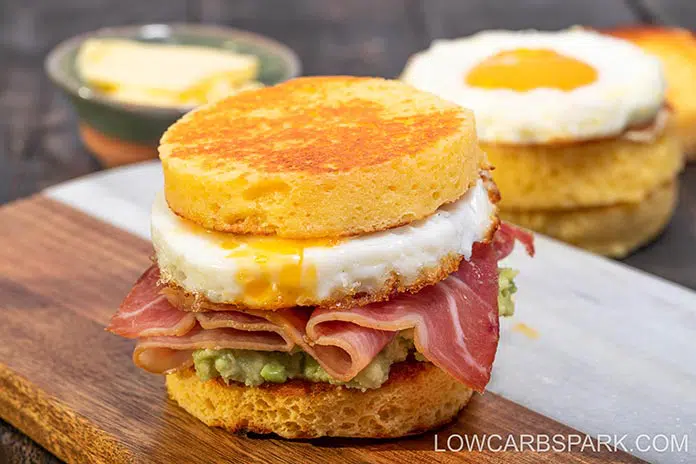
The 90-Second Keto Bread
Microwave bread for one, ready in under two minutes. Single-serve, no special tools, and still one of the easiest low-carb staples.

High-Protein Family Dinners
Weekday meals built around real protein and practical ingredients, the kind of recipes I cook most often for my family.
Notes from readers who cooked these recipes
Reader comments are one of the most helpful parts of running this site. They show me what worked, what needs more explanation, and which recipes people end up making again.
How I try to keep recipes useful
These are the rules I try to follow every time I publish something new.
Where to begin
Three good entry points depending on what you’re looking for:
Every recipe includes nutrition information, step-by-step photos, and notes on substitutions. If something doesn’t work in your kitchen, leave a comment. I read and respond to almost every one.
Questions readers ask
Who creates the recipes on LowCarbSpark?
Every recipe is personally developed, cooked, photographed, and written by Ioana Diaconu. I launched LowCarbSpark in August 2015 and run the blog together with my husband, Emilian, who handles the technical infrastructure.
How are recipes tested?
Every recipe is made in my kitchen before publishing. Most are tested 3 to 7 times, and some take more. The keto caramel took 10 attempts. Emilian, my husband, is the first taste-tester for almost every recipe. Friends, neighbors, and family members test some of them too.
Where are you located?
I live in Romania, but I write recipes specifically for American kitchens. All recipes use US measurements like cups, tablespoons, and ounces, plus ingredients available at most major US grocery stores or local supermarkets. Most of my readers are in the United States and Canada.
Do you use AI for recipes?
Every recipe is developed, tested, photographed, and finalized by me. I do not use AI to invent recipes, generate food images, or publish AI-written recipe cards. I may use basic editing tools for typos or formatting, but the recipe testing, instructions, photos, and final decisions are mine.
Are recipes only low-carb?
No. The blog has evolved to include high-protein recipes, balanced family meals, and everyday recipes made with practical ingredients. All keto and low-carb recipes remain on the blog. They’re still some of the easiest, most practical recipes for busy families.
How is nutrition information calculated?
Nutrition information is estimated from the ingredients and serving size in each recipe, using standard ingredient data and typical US products. It can vary by brand, exact measurement, sweetener, protein powder, flour, and substitution. I use it as a helpful planning estimate, not as medical guidance.
Do you have nutrition credentials?
No, and I want to be transparent. I’m not a Registered Dietitian, certified nutritionist, or medical professional. My experience comes from over a decade of recipe testing, cooking practice, and self-study. The recipes here are kitchen-tested for taste and texture, not designed as medical advice.
Can I request a recipe?
Yes. The best place is in the comments on any recipe post. I read all of them. You can also contact me here. Many recipes on this site started as reader questions.
Last reviewed and updated: June 8, 2026. LowCarbSpark launched in August 2015; this About page was first published in 2016 and refreshed to explain the current recipe process more clearly.
For partnerships, sponsored work, or media inquiries, visit my Work With Me page. For reader questions or recipe requests, you can contact me here.
Thanks for being here.
Ioana
