

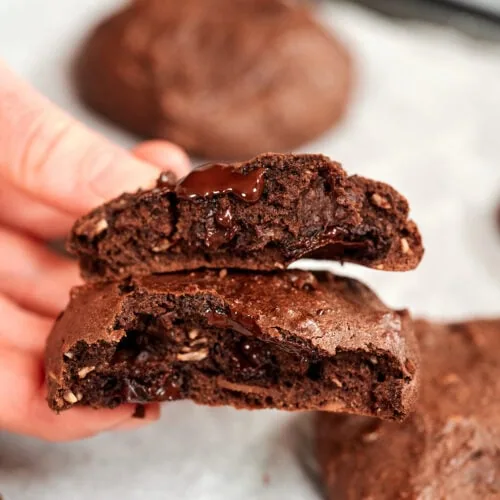
These high-protein chocolate breakfast cookies are one of those recipes you make once, and then everyone immediately asks for them again. They look like dessert, taste like dessert, and yet somehow work perfectly as a real breakfast or snack. That’s my favorite kind of recipe: the sneaky good ones that feel like a treat but actually do something for you.

If you’ve ever tried store-bought protein cookies, you probably know the disappointment. They’re often chalky, oddly sweet, surprisingly expensive, and filled with ingredients that sound more like a chemistry experiment than food. I wanted something different. Something soft, rich, deeply chocolatey, and made with ingredients you actually recognize.
I created this recipe because you loved my breakfast cookies and protein cookies recipes so much and kept asking for more options that were just as easy, chocolatey, and satisfying. You wanted something higher in protein, made with simple ingredients, and still good enough to feel like a treat. These cookies are my answer to that. They’re familiar if you’ve made my other cookie recipes, but with an extra protein boost that makes them even more filling and practical for real life.
What I love most about these protein breakfast cookies is how satisfying they are. Each cookie has about 12 grams of protein, so if you eat two, you’re getting around 25 grams of protein in a way that actually feels enjoyable. They’re packed with protein, healthy fats, and wholesome ingredients that keep you full and energized, without a sugar crash or weird aftertaste.
These cookies are perfect for busy weekdays, slow weekend mornings, school breakfasts, or that afternoon moment when everyone starts asking, “What’s there to eat?” They taste indulgent, feel comforting, and still make sense nutritionally. Once you bake a batch, you’ll understand why they disappear so fast.
Why These Work as a Real Breakfast Cookie
- Solid protein per cookie – With 12 grams of protein each, these do more than just taste good. They help keep you full and energized, not hungry again 20 minutes later.
- Balanced with fats and fiber – The combination of healthy fats and fiber slows digestion, which means steady energy and no mid-morning crash.
- No sugar spike – Unlike most store-bought protein cookies, these don’t rely on refined sugar or mystery ingredients to taste good.
- They’re actually satisfying – One or two cookies feels like a real breakfast, not a placeholder until your next snack.
- They taste like cookies, not “protein food” – Rich, chocolatey, and soft. No chalky texture, no weird aftertaste, just a genuinely good cookie.
Ingredients Needed For High-Protein Chocolate Breakfast Cookies
Now let’s quickly talk about what makes these cookies so good:
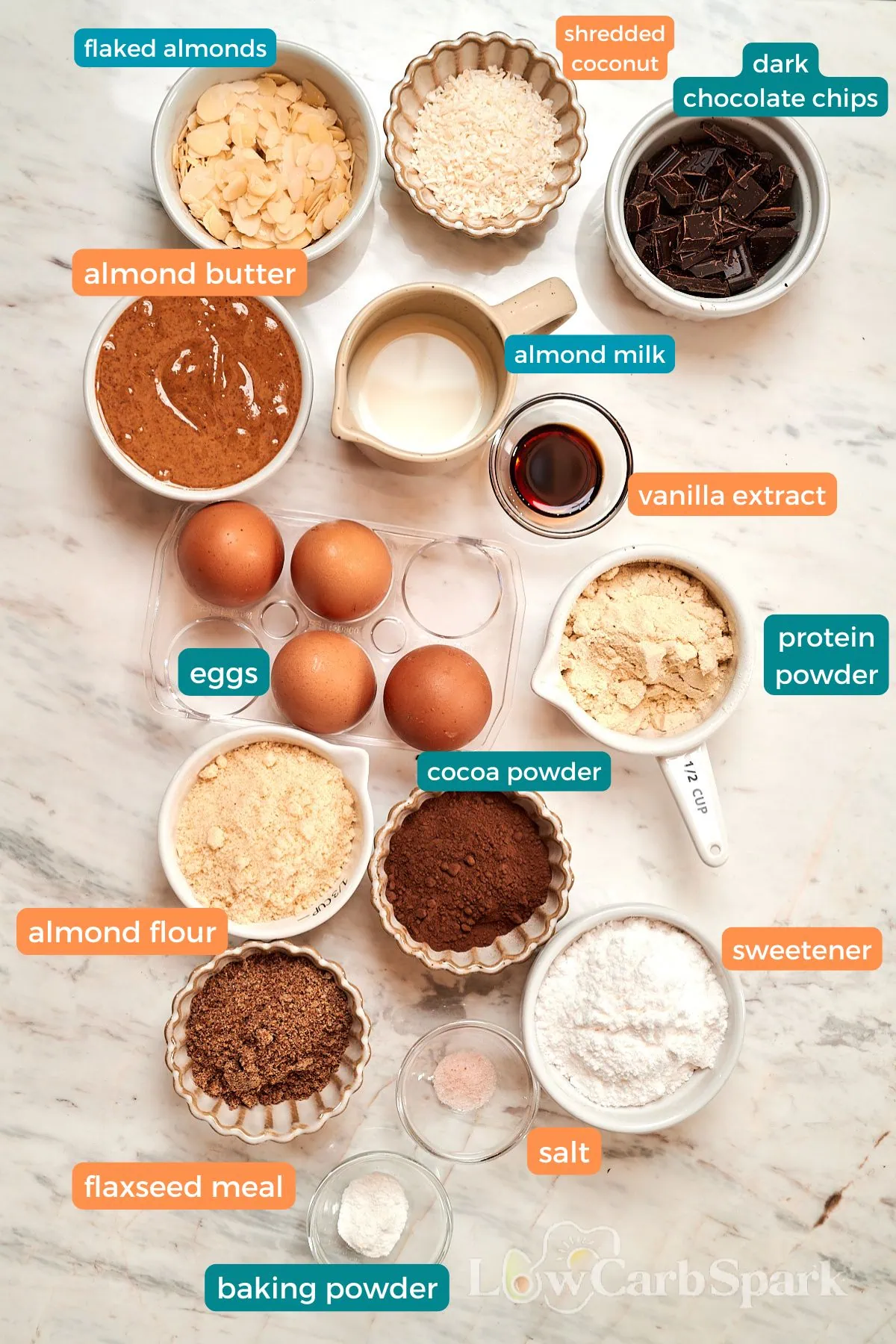
- Eggs – Eggs hold everything together and add protein, so they do a lot of the heavy lifting here. Use large eggs if possible. If your eggs are on the smaller side, I recommend adding one extra egg to keep the cookies soft and cohesive.
- Almond Butter – This is where most of the richness comes from, so use one you genuinely like eating by the spoonful. I go for creamy, no-sugar-added almond butter, but peanut butter or another nut butter works just fine too.
- Almond Milk – Just enough to loosen the dough and keep the cookies soft. Nothing fancy needed. Oat milk, coconut milk, or regular dairy milk all work as well.
- Vanilla Extract – It doesn’t scream vanilla, but it makes the chocolate taste deeper and more balanced. Don’t skip it.
- Protein Powder – Choose a whey protein that bakes well and isn’t overly sweet, because it affects both texture and flavor more than you’d think. I used vanilla protein powder, but chocolate works too. If you’re using an unsweetened protein powder, make sure to add a bit more sweetener.
- Cocoa Powder – Unsweetened cocoa powder is best here so you can control the sweetness and keep the cookies from tasting overly sugary.
- Almond Flour – This is the base of the cookies and gives them a soft, tender crumb with a light nutty flavor. For best results, use superfine blanched almond flour, not almond meal. I don’t recommend swapping this for coconut flour, they behave very differently.
- Flaxseed Meal – Adds fiber and omega-3s. I often just grind whole flaxseeds in my coffee grinder, it takes seconds and works perfectly.
- Sweetener – Use whatever sweetener fits your goals. Monk fruit, erythritol blends, coconut sugar, or even brown sugar all work here.
- Baking Powder – Just a little lift so the cookies stay soft and tender, not dense bricks. We want cookies, not weights.
- Salt – A small amount, but essential. It helps the chocolate flavor pop instead of tasting flat.
- Flaked Almonds – Thin, lightly toasted flakes add crunch without drying out the cookies. You can also use chopped walnuts, hazelnuts, or a mix of nuts.
- Shredded Coconut – Unsweetened is best. Fine shreds blend in nicely and add texture without overpowering the chocolate.
- Dark Chocolate Chips – These are purely for joy, and I highly recommend not skipping them.
How To Make These Delicious Breakfast Protein Cookies
This recipe is very forgiving and easy to follow, but a few small details make a big difference, especially when it comes to texture. We’re aiming for soft, rich, bakery-style cookies, not dry protein pucks.
Preheat and prep.
Start by preheating your oven to 180°C / 360°F and lining a baking tray with parchment paper. These cookies are quite soft when they come out of the oven, so parchment makes your life much easier when it’s time to lift them off the tray.
Mix the wet ingredients until smooth.
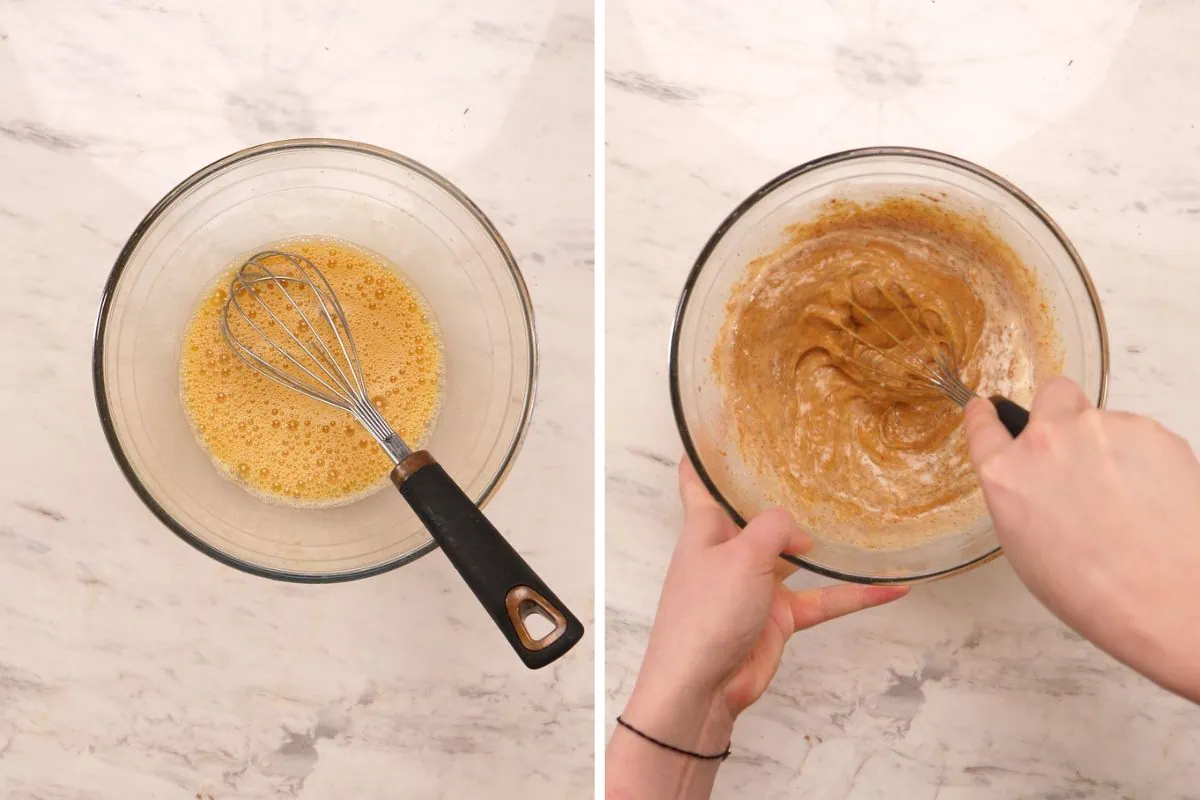
In a large bowl, whisk the eggs, almond butter, almond milk, and vanilla until smooth and glossy. I always take an extra minute here, especially if the almond butter is thick. Getting it fully mixed now means you won’t be fighting little lumps later, and the dough will feel much nicer to work with.
Add the dry ingredients.
Add the dry ingredients straight into the bowl and stir just until everything comes together. This is one of those moments where less is more. As soon as you don’t see dry spots, stop stirring. Overmixing can make the cookies feel heavy instead of soft and tender.
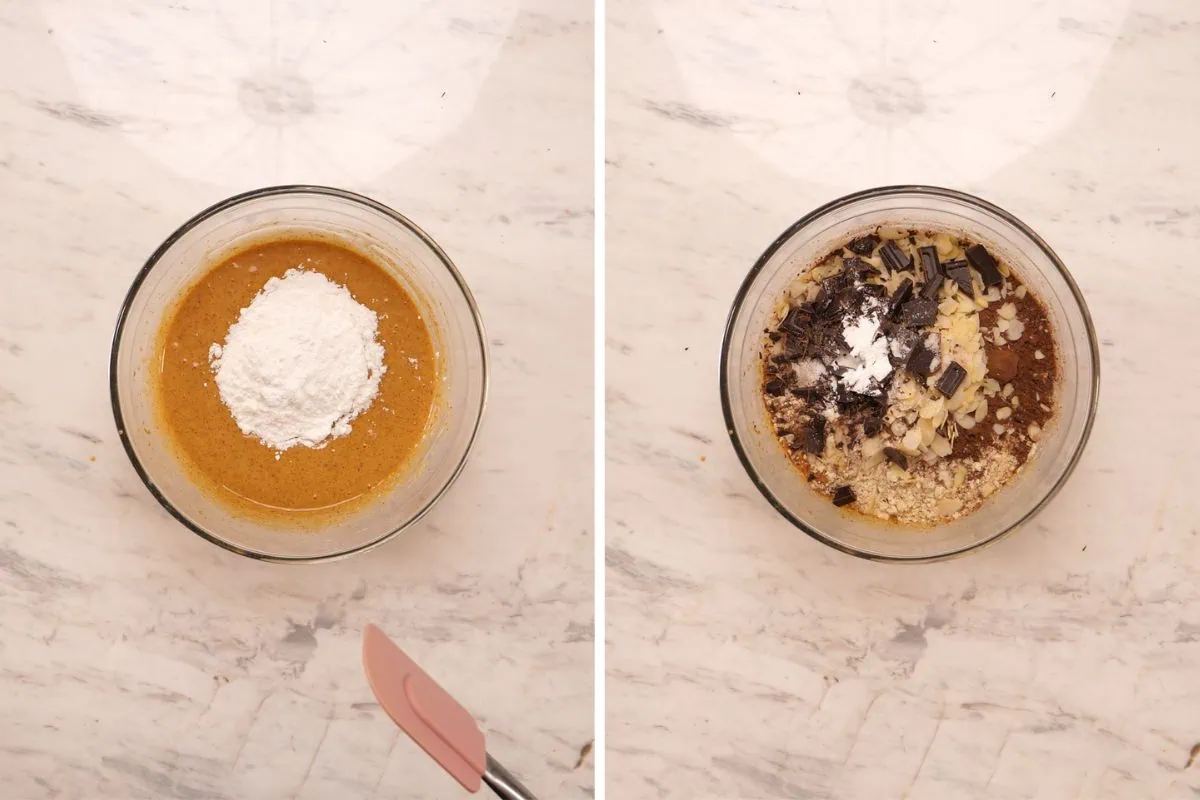
Fold in the good stuff.
Gently fold in the flaked almonds, nuts, shredded coconut, and chocolate chips. I like to make sure everything is evenly mixed so you don’t end up with one cookie that has all the chocolate and another that has none.
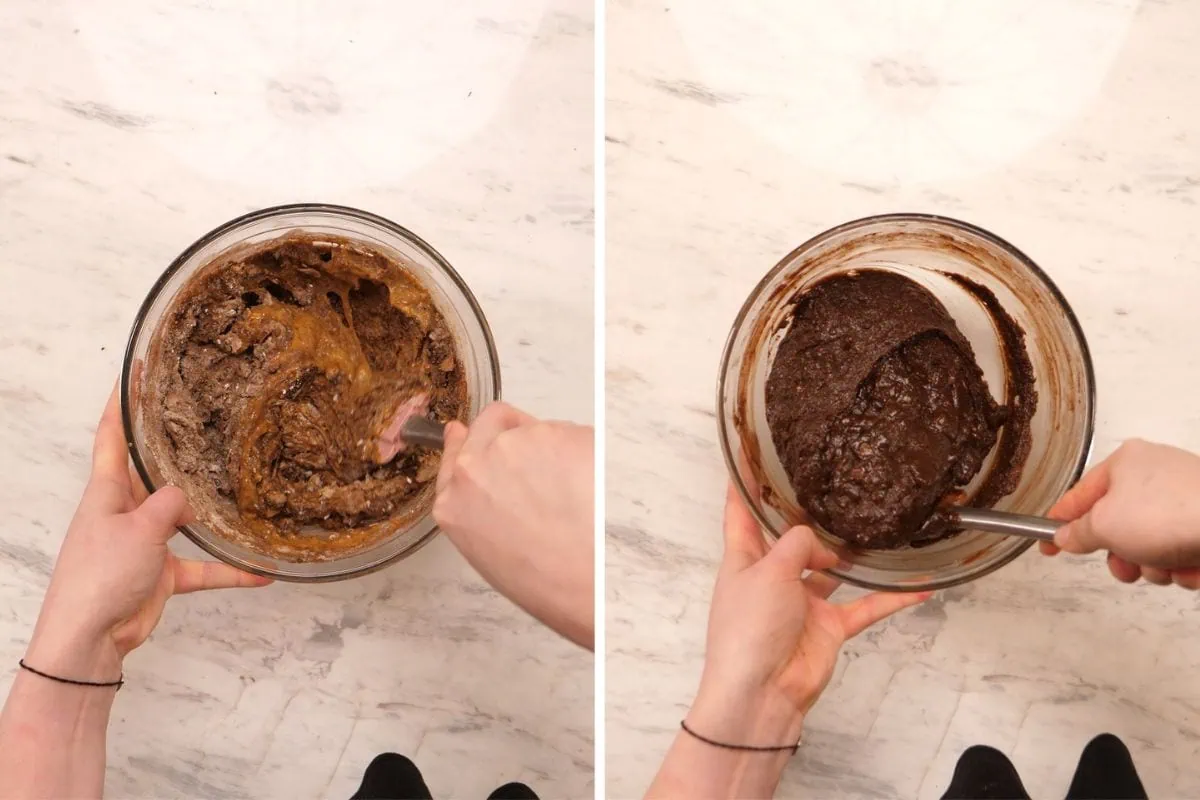
Scoop about 2–3 tablespoons of dough per cookie and place them on the tray with a little space between each one. These cookies don’t spread much, so I gently flatten them with my fingers. They don’t need to look perfect, rustic is part of the charm.
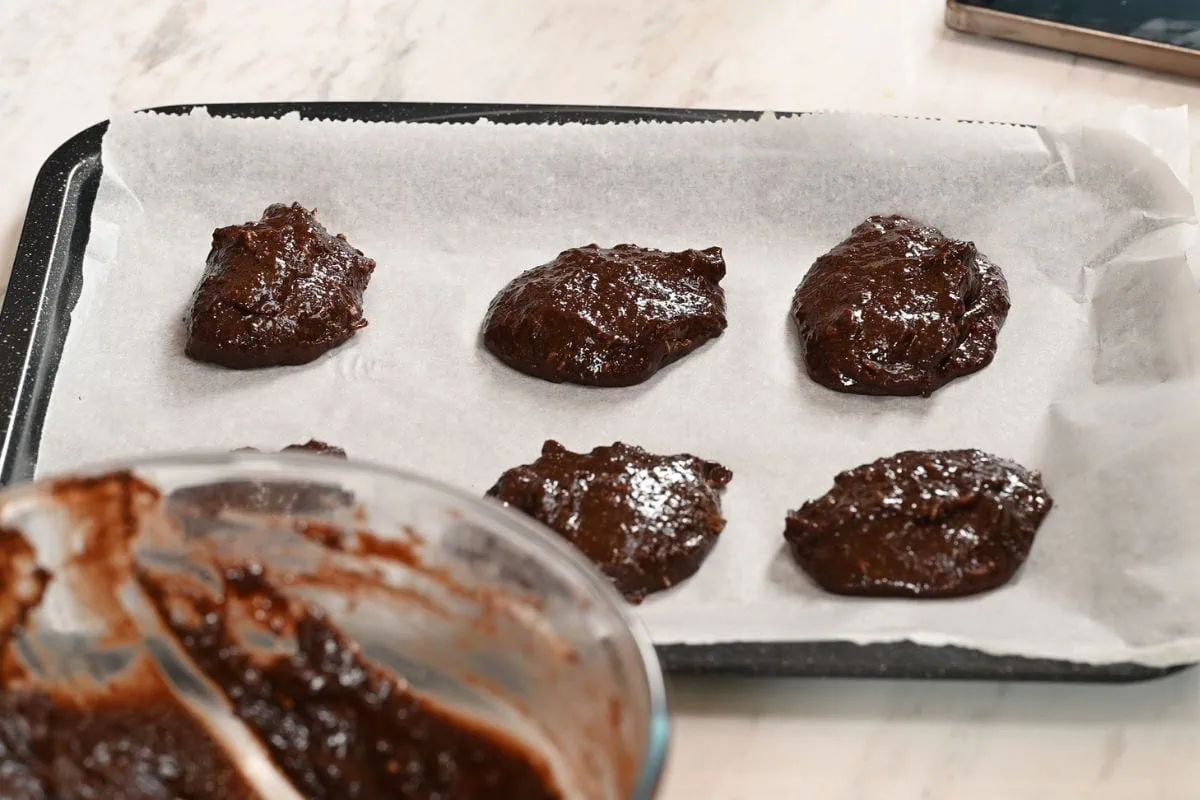
Bake just until set.
Bake for 10–12 minutes. The edges should look set, but the centers should still look soft. If you’re unsure, it’s better to pull them out a little early than a little late. They firm up as they cool, and slightly underbaked is exactly what keeps them soft.
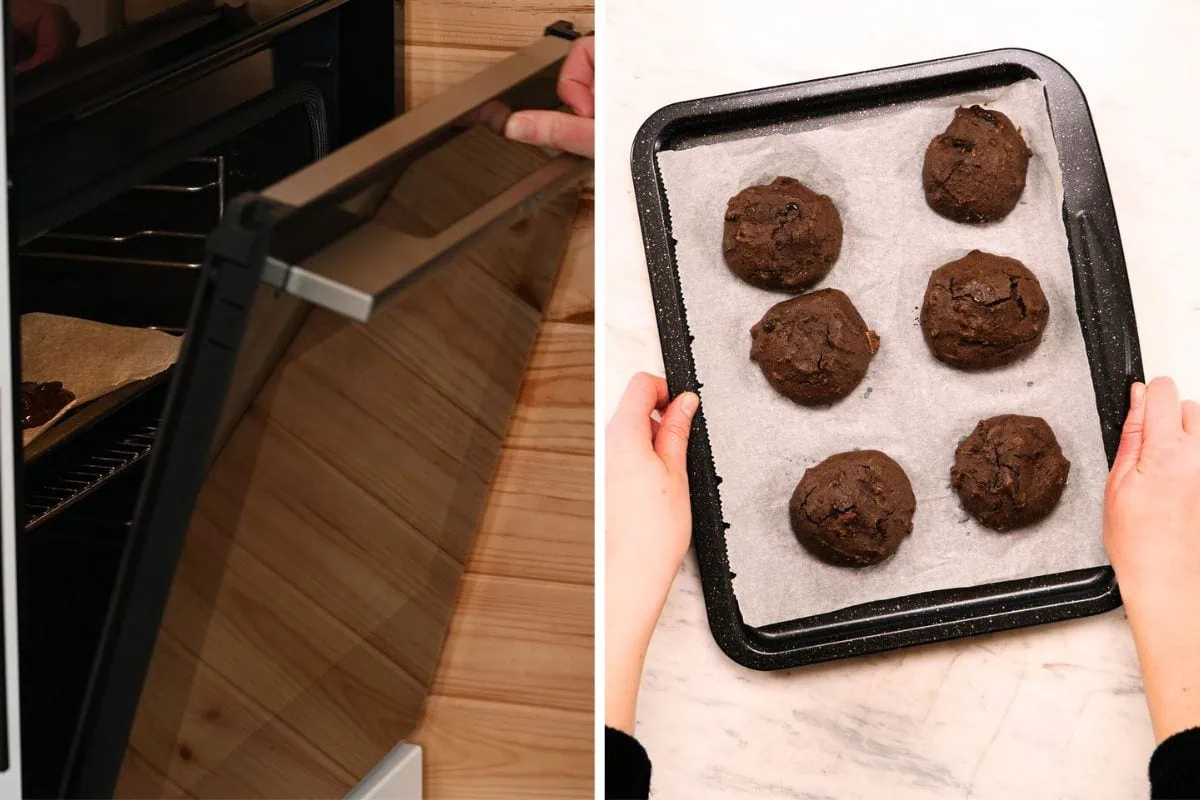
Let them cool completely.
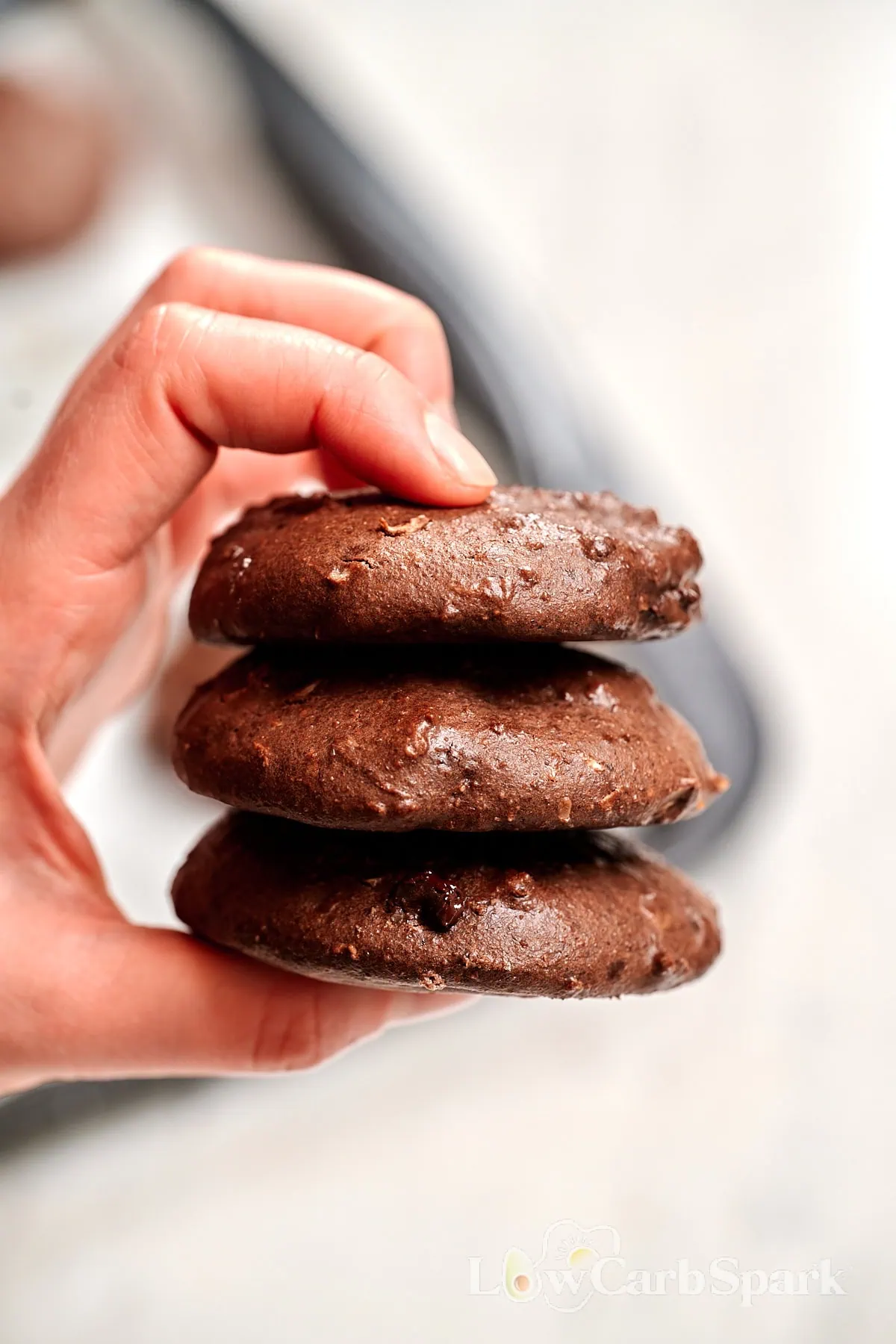
This is the hardest part, but it really matters. Let the cookies cool completely on the tray. This is when they finish setting and get that soft-but-structured texture that makes them feel like a real treat, not a protein snack.
Recipe Variations
One of the best things about these cookies is how easy they are to tweak. Once you’ve made them once, feel free to play around and make them your cookies.
- Peanut Butter Chocolate Cookies
Swap all the almond butter for peanut butter for a stronger, classic chocolate-peanut flavor. - Extra Chocolate Version
Use chocolate protein powder and add an extra tablespoon or two of chocolate chips—because sometimes more is just better. - Nut-Free Option
Use a creamy seed butter (like sunflower seed butter) and skip the flaked almonds and nuts, replacing them with extra coconut or chocolate chips. - Coconut Lover’s Version
Increase the shredded coconut to ¼ cup and skip the nuts for a softer, slightly chewy texture. - Crunchier Cookies
Bake for 1–2 extra minutes and use toasted nuts for a firmer bite.
How to Store & Make Ahead
- Room temperature: Store in an airtight container for up to 2 days.
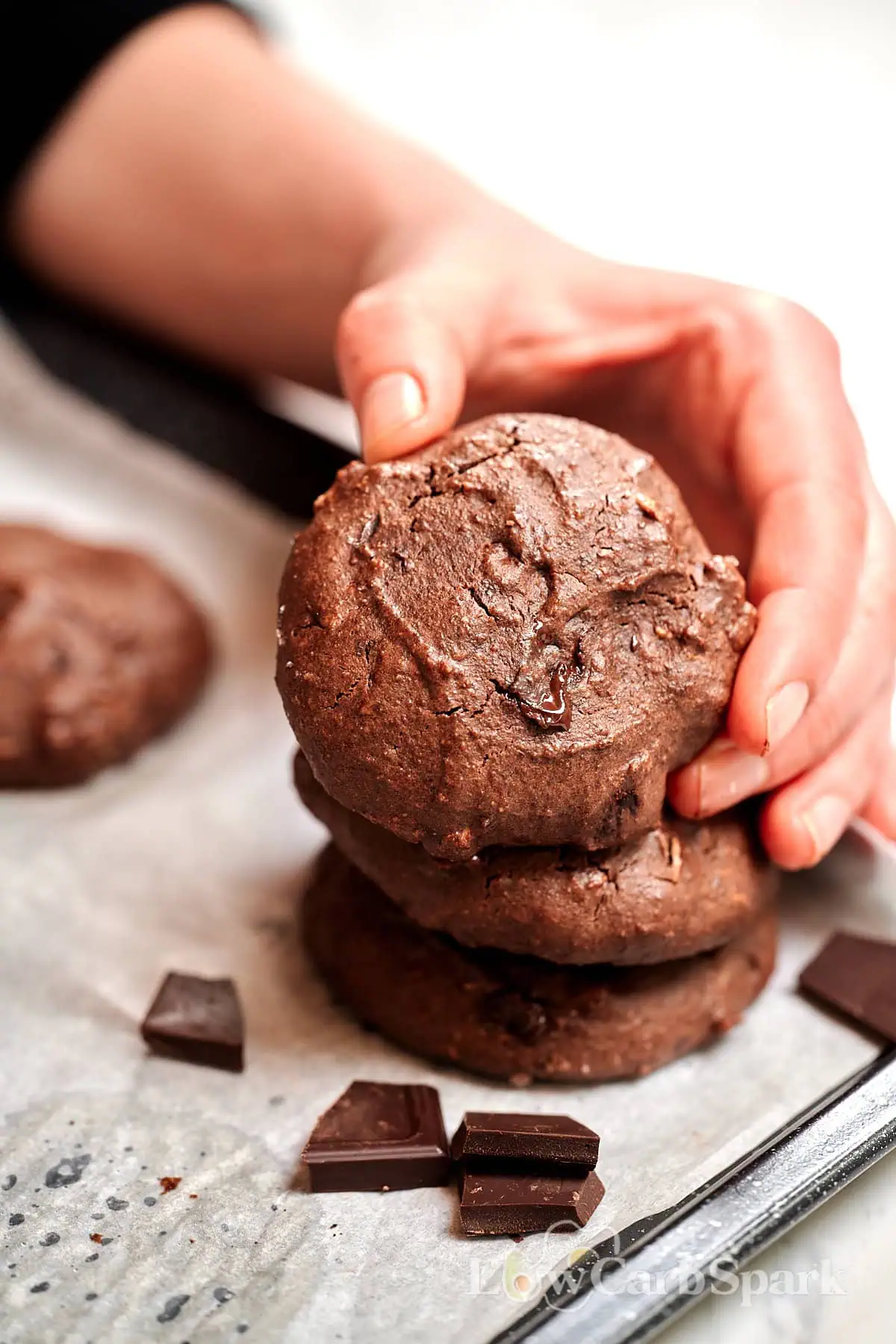
- Refrigerator: For longer storage, I usually keep them in the fridge. Store them in an airtight container for up to 5–6 days. They firm up slightly when cold, but soften again after a few minutes at room temperature.
- Freezer: These freeze really well. Once completely cooled, place them in a freezer-safe container or bag with parchment between layers. They’ll keep for up to 2 months. I like to pull one out the night before or let it sit on the counter for about 30 minutes.
Little tip from my kitchen
If you like them extra soft, warm a cookie for 10–15 seconds in the microwave. It brings the chocolate back to life and makes them taste freshly baked again.
More Easy Healthy Cookies
If you want a version without cocoa, try my high-protein cottage cheese breakfast cookies. They are soft, lightly sweetened, and filled with nuts, seeds, coconut, and chocolate chips.
BEST High-Protein Chocolate Breakfast Cookies
Description
Ingredients
- 3 large eggs room temperature
- 1 cup creamy almond butter or ½ almond butter + ½ peanut butter
- ¼ cup almond milk unsweetened
- 1 tsp vanilla extract
- ½ cup protein powder chocolate, caramel or vanilla
- ¼ cup cocoa powder unsweetened
- ⅓ cup almond flour
- ¼ cup flaxseed meal
- ½ cup sweetener powdered
- 1 tsp baking powder
- ¼ tsp salt
- ½ cup flaked almonds
- 2 tbsp shredded coconut unsweetened
- ¼ cup dark chocolate chips optional, but highly recommended
Instructions
- Preheat oven to 180°C / 360°F. Line a baking tray with parchment.
- In a large bowl, whisk the eggs, almond butter, almond milk, and vanilla until smooth and glossy.
- Add the dry ingredients and mix just until everything comes together. Don’t overmix.
- Fold in nuts, coconut, and chocolate chips.
- Scoop large cookies (2–3 tbsp each), flatten slightly.
- Bake 10–12 minutes. Centers should look soft, not wet.
- Let the cookies cool completely. They’ll firm up and get that perfect texture as they cool.
Nutrition information is shared to make meal planning easier. Values are estimates and can vary depending on the ingredients, brands, and serving sizes used. Learn more in my nutrition policy.

SO delicious with high protein….definitely a winner, taste-wise, and health-wise!